ADAPTATION VILLAGE
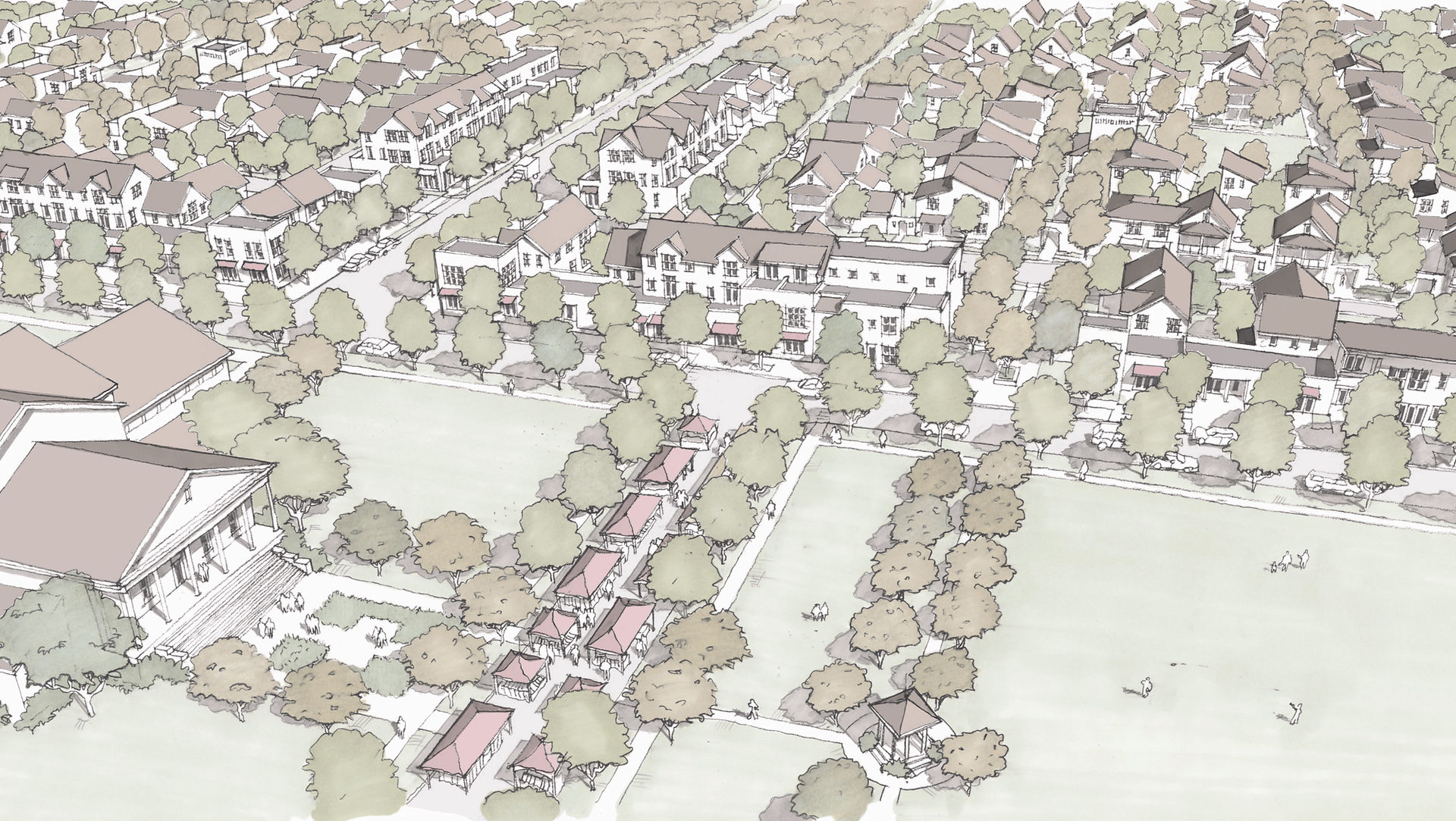
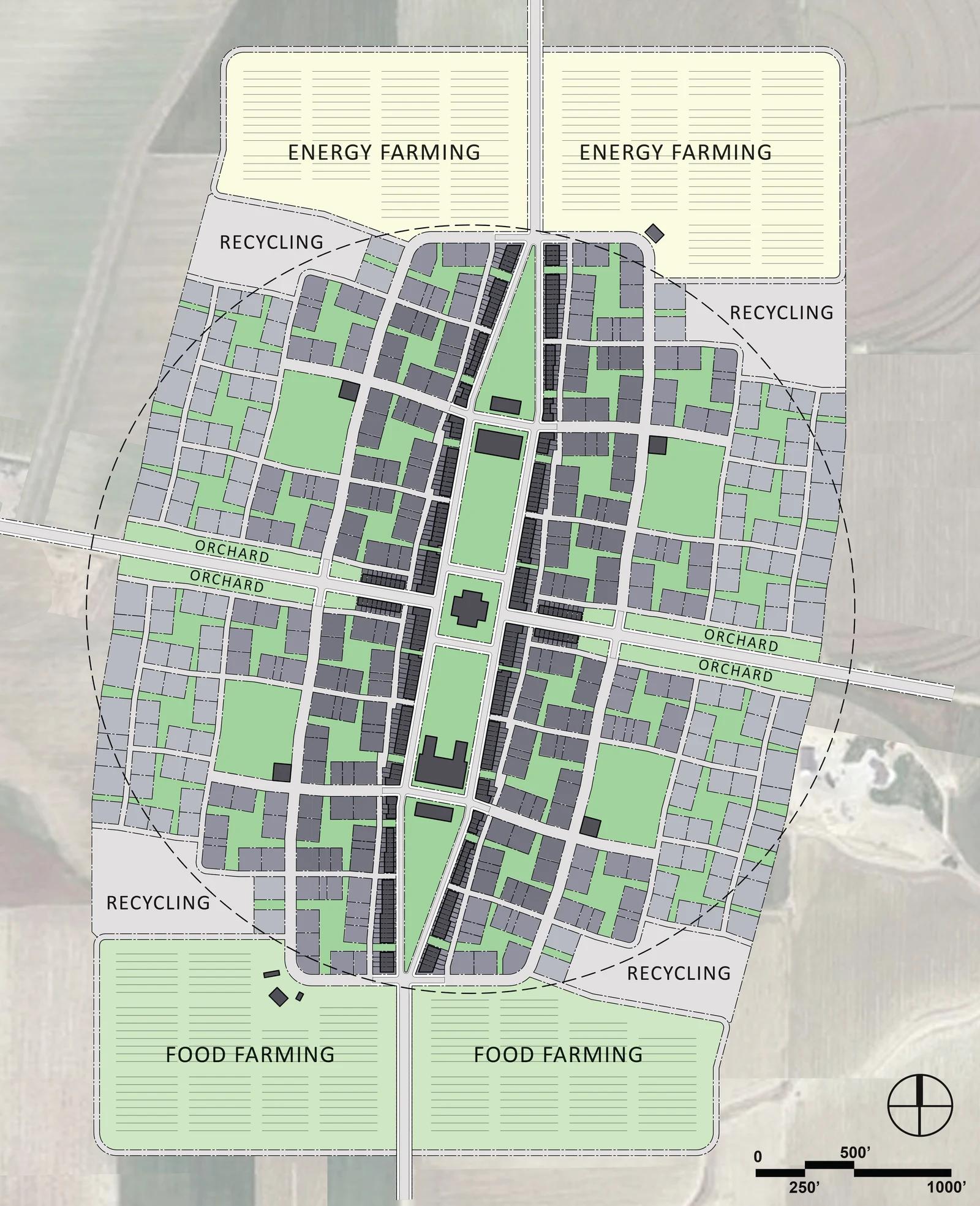
Adaptation Village is a development model that demonstrates principles of localization. It envisions a self-sufficient community at walking shed scale. It is possible to create a life that does not depend on large-scale regional sustenance systems which are likely to be disrupted or fail due to the increasing climate disasters. It is possible for us to be creative, productive, and supportive at local scales, so that we can achieve strong and diverse local economies that can sustain life. Adaptation Village aspires to these objectives. The design principles of Adaptation Village are nesting, transect, succession, gathering, secure place, and climate conscious design.
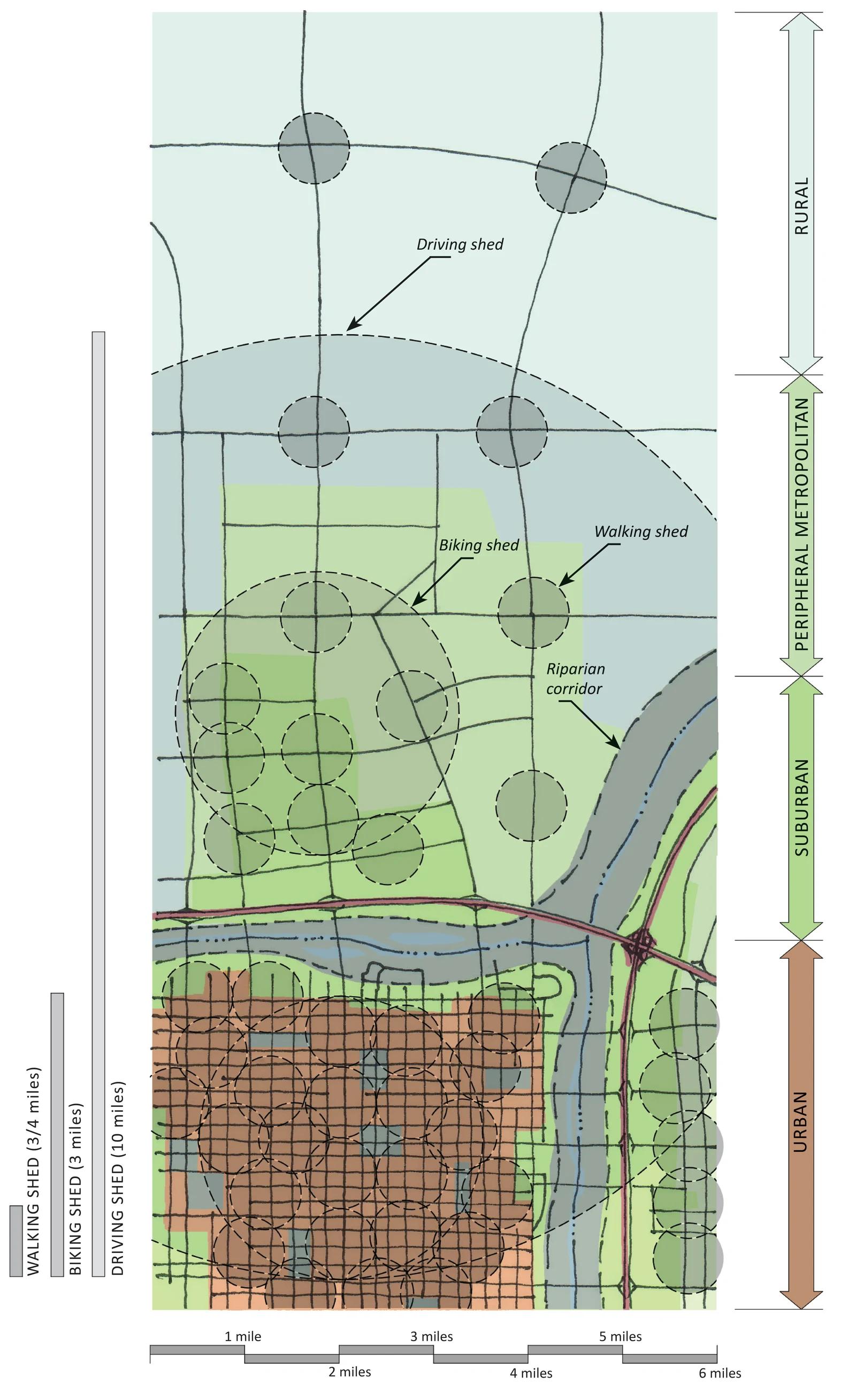
The Adaptation Village model can be employed at various scales including infill developments in urban areas, suburban retrofit in suburbia, new communities within peripheral metropolitan land, and new towns in rural zones.
Localization is not aimed at isolation, but at surviving through isolation if and when it is imposed by disruptions in large-scale sustenance networks. There is no reason why a self-sufficient entity cannot support another one. The objective is to create a system where self-sufficient entities interact with each other and create a network of lean economies.
Back